Spinning Vinyl Meets Cinema: How to Pair the Best Turntables and Klipsch Speakers for the Ultimate Gold Coast Home Theatre Experience

There is something wonderfully tactile about playing a record. The sleeve. The ritual. The gentle crackle before the first note arrives.
Then there is the impact of a great home theatre. A soundtrack that fills the room. Dialogue that remains clear. Bass you can feel without it becoming overpowering.
You do not have to choose between the warm, analogue soul of vinyl and the high-energy performance of cinema. With the right system design, your turntable and Klipsch speakers can become the foundation of a genuinely versatile entertainment space.
For homeowners across the Gold Coast, South-East Queensland and the Northern Rivers, the key is thoughtful integration. The best turntables in Australia are only as good as the system around them. Klipsch speakers are only at their best when they are matched to the room, amplification and listening habits.
Here is how to bring it all together.
Why Klipsch works so well for vinyl and home cinema
Klipsch has a long heritage in dynamic, highly efficient loudspeaker design. Its horn-loaded technology is designed to deliver sound with clarity, energy and a strong sense of scale.
That matters when you are moving between formats.
A well-recorded jazz album should feel intimate and expressive. A live rock record should have presence and attack. A film soundtrack should move effortlessly from a quiet conversation to a symphonic masterpiece.
Klipsch speakers are particularly compelling in a home theatre because they can deliver a lively, immediate presentation at realistic listening levels. Their controlled directivity also helps focus sound towards the listening position, which can improve dialogue intelligibility and stereo imaging.
For vinyl, this sense of immediacy can be equally engaging. You hear the texture of the recording, the timing of the musicians and the character of the pressing without the presentation feeling overly polite.
A few Klipsch options to consider
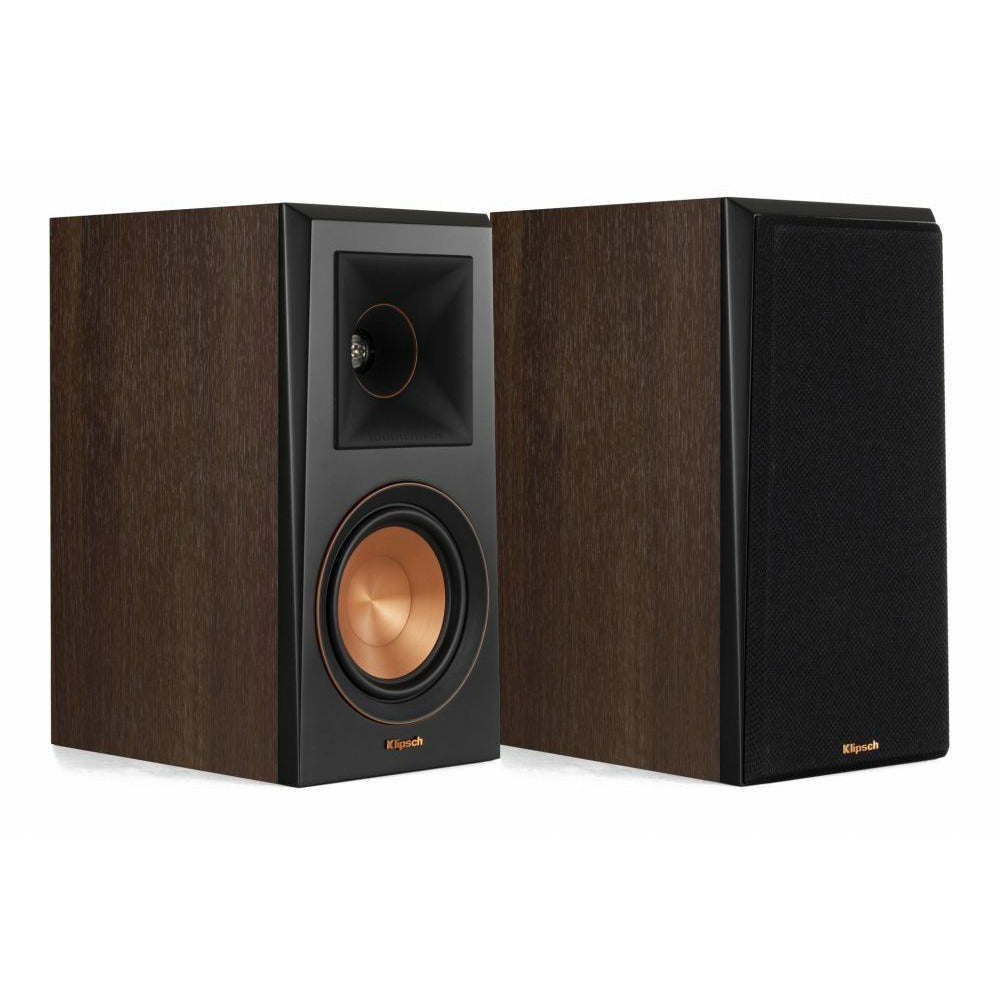
- Klipsch R-40M bookshelf speakers are a practical choice for a compact room, apartment or smaller listening area. They use a 90° x 90° Tractrix horn, a 1-inch LTS aluminium tweeter and a 4-inch TCP woofer.
- Klipsch R-50M bookshelf speakers step up with a larger 5.25-inch woofer, making them well suited to a medium-sized room where you want more scale from two-channel music and front-channel cinema playback.
- Klipsch RP-500M speakers belong to the Reference Premiere range. Their titanium LTS vented tweeter, Hybrid Tractrix horn and 5.25-inch spun copper Cerametallic woofer offer a more refined approach for serious music listening and cinema.
The right choice is not simply the most expensive model. It is the one that suits your room, seating distance, listening level and broader system.
Choosing the best turntable for your system
A turntable is not just a box that spins a record. It is a precision source component. Its platter, motor, tonearm, cartridge and isolation form the invisible backbone of your analogue system.
A good starting point is to think about how you want to use it.
1. For convenience: choose a straightforward, integrated solution
If multiple family members will use the system, convenience matters. A semi-automatic turntable such as the Music Hall Classic can make vinyl more approachable while still offering a considered, high-fidelity presentation.
The “LP Phono” configuration is especially useful when your amplifier or AV receiver does not include a dedicated phono input. The important point is to confirm the output configuration and connection requirements before installation.
2. For serious vinyl listening: choose a dedicated manual turntable
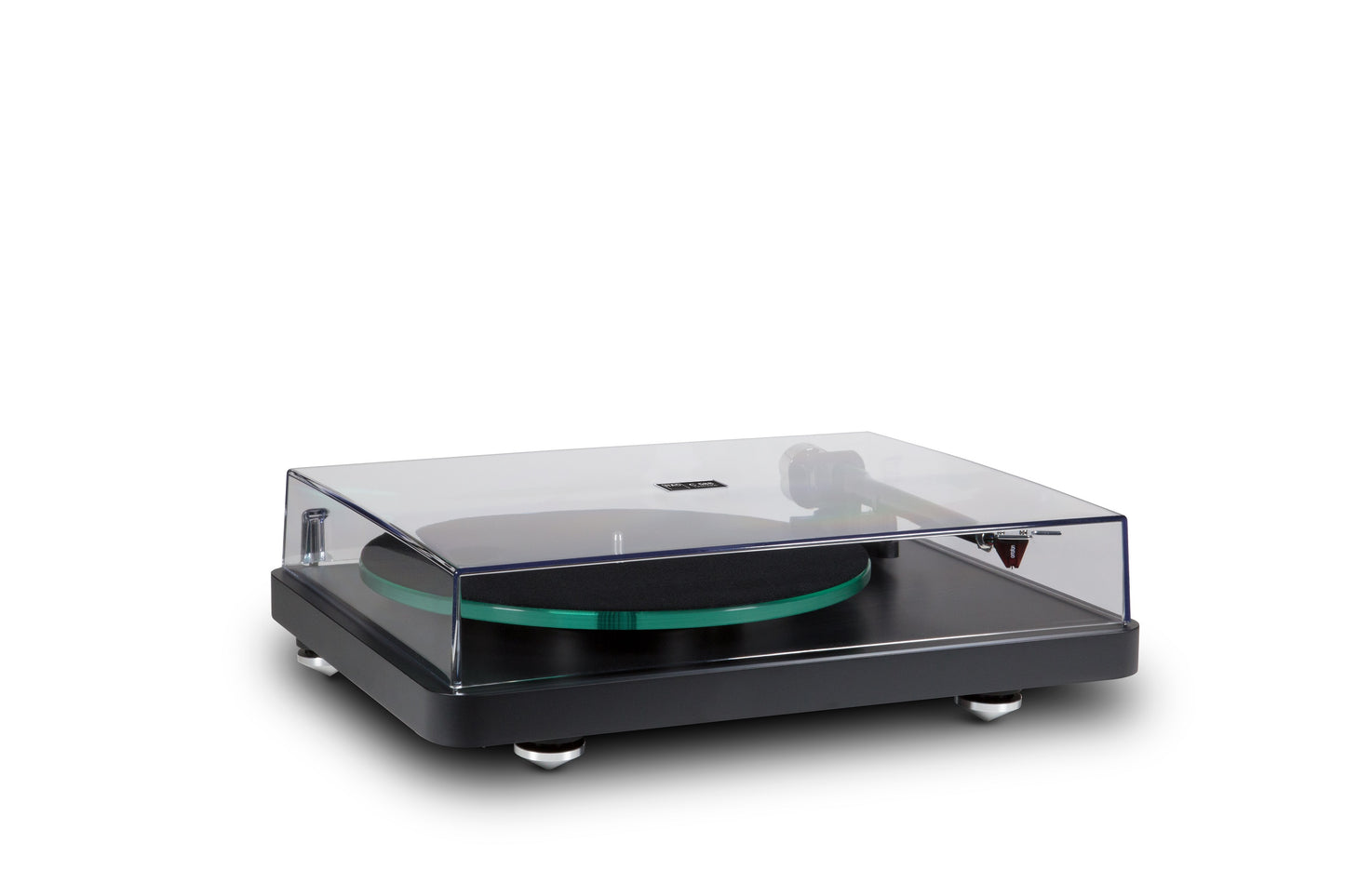
For audiophiles building a system around their record collection, the NAD C 588 Manual Turntable is a strong option to audition.
The C 588 includes:
- A belt-drive design with electronic speed control
- A 10mm glass platter and felt mat
- A 9-inch carbon fibre tonearm
- An Ortofon 2M Red cartridge pre-installed
- Adjustable vertical tracking angle and azimuth
- Tuned isolation feet
- A detachable RCA cable with separate grounding wire
These details are not merely technical decoration. Accurate speed helps preserve pitch. Correct cartridge alignment helps the stylus track the groove cleanly. Effective isolation reduces the effect of footfall, furniture vibration and nearby loudspeaker energy.
The result is more stable timing, greater detail and a more natural sense of musical flow.
The phono stage: the small component that makes a major difference
We have all been there. The turntable is unpacked, the record is ready, and the system produces either no sound or a thin, extremely quiet signal.
The usual culprit is the phono stage.
A turntable cartridge produces a very low-level signal. It needs additional gain and RIAA equalisation before it can feed a standard line input such as AUX, CD or an analogue input on an AV receiver.
There are three common connection paths:
Turntable with built-in phono preamplifier
Turntable set to Line → AV receiver or integrated amplifier → Klipsch speakers
This is the simplest arrangement. It is useful when you want a clean, accessible system with fewer separate components.
Turntable without built-in phono preamplifier
Turntable → external phono stage → amplifier or AV receiver → Klipsch speakers
This is the preferred route for many serious vinyl systems. An external phono stage can provide a quieter, more refined signal path and gives you more flexibility when upgrading your cartridge or turntable later.
A dedicated option such as the Primare R35 Phono Stage can form part of a more sophisticated analogue front end.
AV receiver with a phono input
Turntable → PHONO input on AV receiver → Klipsch speakers
This is convenient, but the quality of the receiver’s phono stage varies. If vinyl is an important part of your listening, we recommend auditioning the receiver’s phono input against an external phono stage before committing to the final installation.
The answer is a resounding yes: one system can serve both vinyl and cinema. The signal path simply needs to be planned correctly.
Three sensible turntable and Klipsch system directions
1. Compact Gold Coast living room
For an apartment, media room or smaller open-plan space, consider:
- Music Hall Classic turntable
- Klipsch R-40M bookshelf speakers
- A stereo integrated amplifier or AV receiver
- A compact subwoofer, if you want additional low-frequency impact for films
Place the bookshelf speakers on sturdy stands rather than directly inside a cabinet. This improves stereo imaging and reduces unwanted resonance.
2. Music-first home theatre
For a homeowner who values vinyl as much as film, consider:
- NAD C 588 turntable
- External phono stage or high-quality phono input
- Klipsch RP-500M speakers for the front left and right channels
- A matching Klipsch centre channel and surrounds
- A carefully integrated subwoofer
This arrangement gives you a credible two-channel foundation while allowing the system to expand into a full surround sound installation.
3. Larger entertainment room
In a larger lounge, dedicated theatre room or open-plan Gold Coast living area, you may prefer larger Klipsch floorstanding or Heritage models. Toma Audio is a Klipsch Certified Heritage Dealer, with options designed for greater scale and impact.
The goal is not to make the room loud for the sake of it. It is to create effortless dynamics. The system should sound composed during quiet passages and powerful when the music or film demands it.
What professional home theatre installation adds
Buying quality components is only part of the process. Installation is where the system becomes a complete experience.
A professional home entertainment solution from Toma Audio can address the details that are easy to overlook:
Speaker placement
Front, centre and surround speakers need to work together as a coherent soundstage. Small changes in height and toe-in can affect dialogue and imaging dramatically.Cable planning
A discreet wired backbone keeps signal paths reliable and reduces visible clutter. For networked entertainment, wired backhaul can also improve stability by connecting access points or key equipment directly to the network.Turntable isolation
Your turntable should sit on a stable, level surface away from direct subwoofer energy and unnecessary footfall. Correct grounding is equally important to minimise hum.Acoustic calibration
Calibration measures how the room affects the speakers and applies timing and level adjustments. In plain English, it helps every seat receive a more balanced presentation.Latency and lip-sync
Latency is the delay introduced as audio and video are processed. A well-configured AV system ensures dialogue matches the picture, while appropriate direct or stereo modes can preserve a more immediate vinyl experience.Lifestyle integration
Lighting control, multi-room audio and hidden equipment can make the system feel seamless rather than technical. The best technology is often the technology you barely notice.

Placement matters more than many people expect
Even the best turntables in Australia and the most accomplished Klipsch speakers cannot overcome poor placement.
Start with symmetry. Position the left and right speakers at equal distances from your main listening position. Aim them towards you if the room benefits from greater focus. Keep them clear of corners where possible, as nearby walls can exaggerate bass.
For bookshelf speakers, use solid stands that place the tweeters close to ear height. For a turntable, choose a level shelf with enough clearance to operate the tonearm comfortably.
In an open-plan home, soft furnishings, rugs and curtains can help control reflections without making the room feel acoustically lifeless. You want clarity, not a room that feels unnaturally dull.
The Toma Audio approach
At Toma Audio, we listen first.
Your room, music collection and daily habits matter. So does the way you want to feel when the system is running. Perhaps it is a Friday evening with a glass of red and a favourite record. Perhaps it is movie night with the whole family. Perhaps it is streaming music throughout the home while you move between rooms.
Our showroom in Tweed Heads serves the Gold Coast, South-East Queensland and Northern Rivers. You can audition turntables, Klipsch speakers and complete Hi-Fi systems in a relaxed setting before making a decision.
That is the difference between buying equipment and making a sound investment.
You are welcome to bring your listening priorities, room plans or existing equipment. We can help design a bespoke system that respects the character of vinyl while delivering the energy and convenience of modern home cinema.
No pressure. Just good advice, carefully matched components and the opportunity to hear the experience for yourself.